Global storage networks are under pressure to hold more materials without expanding every facility. Mobile Shelving offers a practical response. It uses rail-mounted units that move along compacted aisles, opening only the access lane required. In a records room, one operator can shift a dense row and reach labeled cartons within seconds. In a warehouse, the same principle can protect valuable floor space.
Industry data supports this efficiency focus. The 2024 Global Warehousing Study by Logistics Management reports continuing investment in warehouse technology, driven by labor shortages and higher operating costs. Grand View Research also identifies warehouse automation as a major growth market, although its categories do not always separate mobile shelving from automated storage systems. That distinction matters. Buyers should avoid treating every market forecast as a direct shelving projection.
The strongest case appears where storage density, controlled access, and adaptability matter together. Archives, healthcare facilities, museums, spare-parts centers, and international distribution sites can benefit from configurable bay widths, lockable access, and modular expansion. A 2023 report from the International Facility Management Association emphasizes that space planning must support changing operational needs, not only present capacity. Mobile Shelving aligns with that principle by reducing fixed aisle footprints while preserving organized retrieval.
Small details influence the result. Floor loading, rail alignment, seismic conditions, fire protection, and accessibility require professional review. Poor planning can create bottlenecks. It can also make future maintenance expensive. Global standards differ, and installation data should be checked locally. The conclusion is not automatic: Mobile Shelving works best when the storage profile, building structure, workflow, and safety requirements are evaluated together.
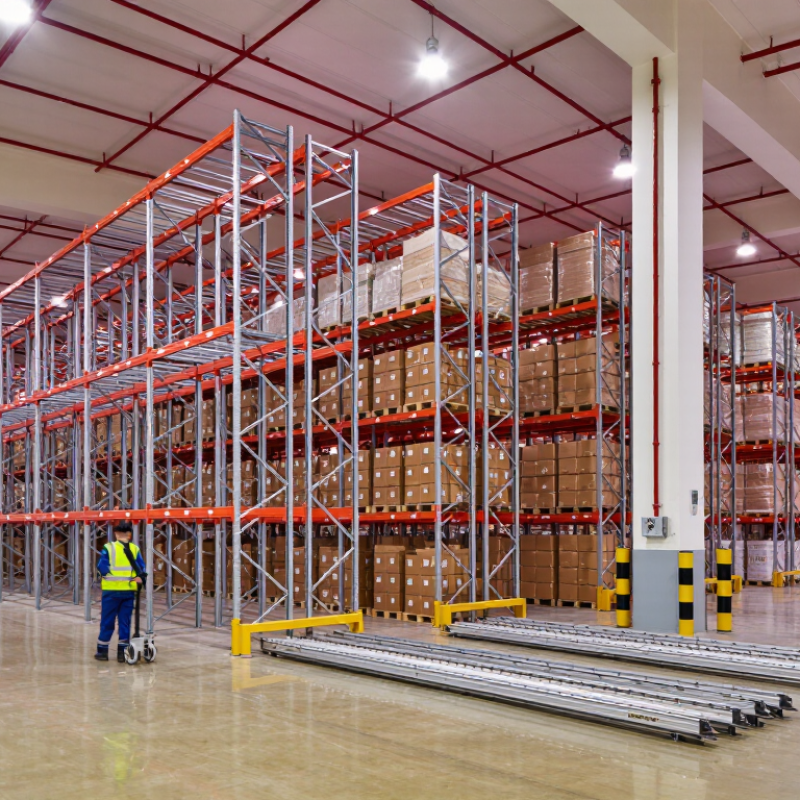
Mobile shelving is a storage system built on floor-mounted rails. Shelving units move sideways, instead of standing in fixed rows. A hand wheel, chain drive, or electric motor moves the carriages. Operators open only the aisle they need.
Picture a warehouse worker turning one wheel beside a compact row. The shelves glide slowly, leaving a single working passage. This design removes many permanent aisles and can increase usable storage capacity by up to 80%, depending on the layout and load requirements. The 2024 MHI Annual Industry Report found that 55% of surveyed supply-chain professionals planned to increase technology investment. Mobile shelving fits that direction, but it is not automatically high-tech.
Controls usually include brakes, aisle sensors, emergency stops, and carriage interlocks. These features help prevent movement when someone enters an active aisle. However, installation still requires accurate floor surveys, load calculations, and routine rail inspections. Poor alignment can create noise, friction, or uneven movement. Small errors matter.
In global facilities, local electrical standards and worker-training rules also affect the design. Humid archives may need corrosion-resistant components. Cold storage may require materials rated for low temperatures. The system saves floor space, but access becomes more deliberate. That trade-off deserves honest planning.
Global facilities choose mobile shelving systems because storage pressures rarely look the same twice. A records room may need dense capacity, while a distribution site needs rapid access and clear handling routes. Mobile bases move shelving along guided rails, opening one working aisle when needed. This can reclaim valuable floor area without expanding the building. It is practical. Yet density alone is not success. Teams must study load weights, shelf dimensions, floor strength, ceiling clearance, and daily retrieval patterns before specifying equipment.
In humid coastal facilities, corrosion-resistant finishes and routine inspections matter. In colder regions, seals, lubricants, and temperature changes deserve attention. Local fire protection, accessibility, seismic, and emergency-egress requirements should shape the layout. Experienced planners also test turning space for carts, lighting inside deep bays, and safe stopping distances. A well-designed control system should be clear to every shift, not only to trained technicians. Small labels help. A manual operating plan also matters when power is unavailable.
The most reliable installations begin with measured evidence: inventory surveys, sample retrieval times, and projected growth. Data can expose an uncomfortable truth. The proposed system may be too dense for real work. Worth finding early. Maintenance schedules should cover rails, wheels, sensors, locks, and structural connections. Staff feedback after installation can reveal blocked aisles or awkward shelf heights. Global facilities often share the same goal, but local conditions decide the details. Flexibility is valuable, though it requires disciplined planning and honest review.
Mobile shelving helps warehouses use floor space with greater discipline. Shelves move on guided rails, so only one access aisle opens at a time. This design can increase storage capacity without expanding the building footprint. In a 900-square-meter facility, that difference may create room for extra inventory or safer handling zones. It also reduces walking distance when workers retrieve frequently used cartons. Less travel can support faster picking and lower daily fatigue. However, mobile shelving is not a universal cure. Heavy loads, uneven floors, and poor layout planning can reduce its value.
For international operations, flexibility matters. Shelving can support different carton sizes, archive boxes, spare parts, or packaged goods. Adjustable levels help teams respond when product dimensions change across regions. Locking systems and clear aisle controls can improve workplace safety. Digital location labels may also reduce search errors, especially during shift changes. Yet, technology alone will not fix unclear procedures. Staff training, routine inspections, and accurate inventory records remain essential. I have seen efficient layouts fail because workers treated capacity as the only goal.
Tips: Measure real aisle traffic before choosing a configuration. Keep emergency routes unobstructed. Check floor loading limits with a qualified professional. Reserve accessible positions for fast-moving items. Review the layout after seasonal demand changes. Leave some spare capacity; full shelves look efficient, but they can slow every task.
Evaluating mobile shelving starts with the inventory, not the equipment. Measure carton depth, load weight, retrieval frequency, and future volume. MHI’s 2024 Annual Industry Report, based on more than 1,000 supply-chain professionals, identifies automation as a major investment priority. Still, a motorized aisle may be excessive for slow-moving files. A hand-operated system can be simpler, cheaper, and easier to maintain.
Check the floor before checking the catalog. Record slab capacity, levelness, ceiling height, sprinkler clearance, and emergency access. OSHA requires stored materials to remain stable and aisles to provide safe clearance. Local fire authorities may add stricter requirements. In humid regions, ask for corrosion-resistant finishes and protected electrical components. In cold storage, test controls with gloves. Small details matter.
Calculate usable capacity, not just shelf count. Compare current floor area with the proposed footprint, then include installation, inspections, energy use, servicing, and staff training. WERC’s warehousing research consistently identifies labor availability and productivity as major operating concerns, so measure average retrieval time during a real shift. Do not trust a showroom demonstration. It is too clean. Test uneven loads, peak traffic, and one awkward oversized item. My own practical preference is to leave expansion space, although that choice can feel wasteful at first. A dense design may win today and fail when inventory changes.
Mobile shelving can increase storage density without expanding a facility. Its value depends on disciplined installation, not only compact design. A level floor, verified load ratings, and correctly aligned rails prevent uneven movement. Installers should survey floor strength, aisle clearance, seismic exposure, and emergency access before assembly. Local building and fire requirements still apply.
Safety deserves daily attention. The U.S. Bureau of Labor Statistics recorded 1,495 fatal work injuries in transportation and material-moving occupations during 2023. Mobile systems are not the only cause, but this figure shows why moving equipment requires control.
Use interlocks, emergency stops, visible aisle indicators, and anti-tip protection. Train every operator with practical drills. Never assume occasional users understand stored energy or closing gaps. The uncomfortable lesson is simple: a tidy installation can still become dangerous when staff bypass safeguards.
Long-term maintenance should follow measured intervals. Inspect rails for debris, anchors for loosening, wheels for wear, and sensors for delayed response. Record findings with dates, photographs, and corrective actions. ISO 55001 guidance supports managing physical assets through documented risks and lifecycle decisions. For global facilities, keep inspection instructions multilingual and assign one accountable site owner. Spare components should match approved specifications, not improvisation. I would not claim maintenance schedules are universal; dust, humidity, loading patterns, and earthquake exposure change the interval. A quarterly review may be adequate in one archive, but insufficient in a busy warehouse. Regularly compare actual loading with design limits, especially after relocation or renovation.
Measure carton depth, load weight, retrieval frequency, and expected inventory growth. Start with the inventory, not the equipment.
No. Motorized aisles may be excessive for slow-moving files. Hand-operated systems can cost less and need simpler maintenance.
Check slab capacity, levelness, ceiling height, sprinkler clearance, and emergency access. Uneven floors can cause poor rail alignment and unstable movement.
It can increase density without expanding the facility. Compare usable floor area, not just the number of shelves.
Include installation, inspections, energy use, servicing, training, and future changes. A dense design may save space today but limit tomorrow’s flexibility.
Measure average retrieval time during a real shift. Test uneven loads, peak traffic, and one awkward oversized item.
Use interlocks, emergency stops, visible aisle indicators, and anti-tip protection. Train every operator through practical drills. Do not trust assumptions.
Inspect rails, anchors, wheels, and sensors at measured intervals. Record dates, photographs, defects, and corrective actions.
There is no universal interval. Dust, humidity, loading patterns, and seismic exposure change the schedule. Quarterly checks may be enough somewhere, but not everywhere.
Compare actual loading with design limits again. Recheck alignment, floor conditions, emergency access, and protective devices. Small details matter.
Mobile Shelving is a flexible storage solution designed to maximize available floor space by placing shelving units on movable bases. Instead of leaving permanent aisles between every row, the system opens an aisle only where access is needed. This design helps warehouses, archives, offices, healthcare facilities, and other global operations store more materials within the same footprint while keeping retrieval organized and efficient.
When evaluating Mobile Shelving, organizations should consider the type, size, weight, and frequency of access associated with their stored items. Important factors include load capacity, layout flexibility, user safety, accessibility, and compatibility with existing workflows. Professional installation, clear operating procedures, stable flooring, and regular inspections are essential for reliable performance. With appropriate planning and long-term maintenance, mobile systems can reduce space requirements, improve inventory visibility, support operational efficiency, and adapt to changing storage demands across different facilities.

FortisRack