Stackable Storage can turn a crowded shelf, closet, or garage corner into a more usable space. But the right choice depends on what you store, how often you reach for it, and how much weight each container must hold. A clear box makes seasonal decorations easy to spot. A sturdy bin can handle heavier tools. A lidded basket may look calmer in an open room, though it can hide what is inside.
Professional organizer Marie Kondo writes, “The question of what you want to own is actually the question of how you want to live your life.” That idea offers a useful starting point: choose storage around real habits, not just appearance. For this guide, we’ll compare common types, including stackable plastic bins, clear modular drawers, wire baskets, and heavy-duty totes. Each solves a different problem. Some save shelf space; others keep small items visible or protect belongings from dust. Fit matters, too. A bin that overhangs a shelf can wobble, and a lid that looks secure may not lock firmly.
There is no single best option. Not quite. The most useful system is one you can lift, label, and access without moving a precarious tower. We’ll look at capacity, materials, visibility, and everyday handling, with practical examples for kitchens, closets, workshops, and storage rooms. A small caveat: product dimensions and weight limits vary, so check the manufacturer’s specifications before stacking.
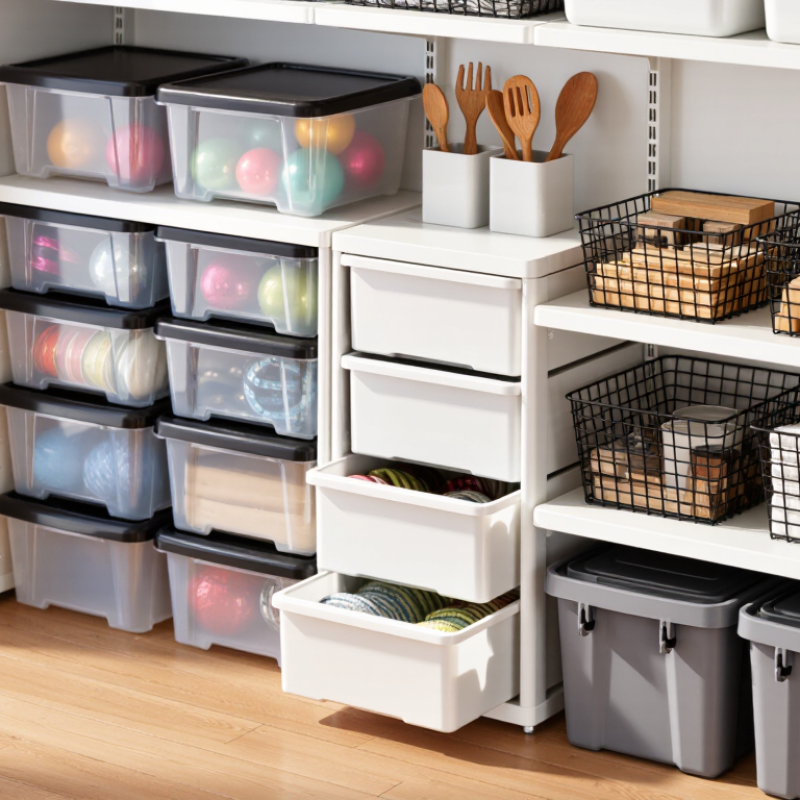
Stackable storage bins and boxes turn unused vertical space into organized storage. They work well in closets, garages, laundry rooms, and pantry shelves. Clear boxes make seasonal clothes or spare cables easy to spot. Opaque bins can hide visual clutter, but labels become essential. Choose containers with flat, stable lids and matching footprints. Before buying, measure the shelf depth and ceiling clearance. A tall stack is only useful if you can safely reach the bottom box. Check the maker’s load limits, and place heavier items low. Plastic may handle damp areas better than cardboard, though sealed containers can still trap moisture inside. Nothing is completely foolproof.
Tips: Group items by use, not just by size. Put holiday decorations together, and keep frequently used supplies near eye level. Add a short label to the front and lid. Test one stack before filling every box; lids can flex under uneven weight.
For a neat setup, use boxes of similar dimensions so their edges align. Keep stacks on a level floor, away from doors that may bump them. Leave a little room to pull out each container without shifting the whole pile. One trade-off is worth considering: uniform boxes look tidy, but odd-shaped belongings may waste space inside them. Measure those items first, or reserve a flexible bin for them.
They fit closets, garages, laundry rooms, and pantry shelves. Clear boxes help you spot spare cables or seasonal clothes.
Use flat, stable lids and matching box sizes. Put heavier items near the bottom. Check the load limits, too.
Measure shelf depth, ceiling clearance, and the items themselves. A tall stack is awkward if you cannot reach its bottom box.
Plastic may suit damp areas better, but sealed bins can trap moisture. Nothing is foolproof. Check stored items occasionally.
Add short labels to the front and lid. Group items by use, such as holiday decorations or laundry supplies.
Place shelves on a level floor and check their rated capacity. Store heavier objects on lower levels. Even sturdy shelves can wobble.
Racks allow airflow around drying trays or sports equipment. Open-sided crates make contents easier to see, though they offer less dust protection.
Measure the full stack, not just one crate. Leave room to pull containers out without shifting the pile. I still misjudge this sometimes.
Stackable Storage offers a practical way to make better use of vertical space while keeping everyday items organized and accessible. Bins and boxes are useful for grouping belongings, protecting contents, and making stored items easier to move. For smaller items or supplies that need frequent access, stackable drawer units and modular cabinets provide separate compartments that can be arranged to suit different spaces and storage needs.
Shelves, racks, and crates offer other flexible options, helping organize items of different sizes or creating accessible storage in closets, work areas, and utility spaces. Specialized stackable storage can also be chosen for particular belongings, with designs suited to their shape, size, or handling needs. By considering what will be stored, how often it will be used, and the available space, it is easier to choose a combination that stays stable, orderly, and adaptable over time.

 FortisRack