How to Choose the Best Pegboard Displays for Retail

Time:2026-10-23 Author:Sophia
0%

Choosing the right Pegboard Displays can shape how shoppers notice, touch, and trust products in a retail space. A weak fixture creates clutter. A thoughtful one turns a blank wall into a clear selling path.

Retail stores now compete with highly convenient digital channels. Deloitte’s 2024 Global Powers of Retailing report emphasizes the continuing importance of connected, experience-led shopping. The National Retail Federation’s 2024 Consumer View research also highlights how shoppers move between online research and physical stores. This makes display quality more important, not less. Customers still want to see product size, compare options, and understand value within seconds.

Small details matter.

A pegboard’s hole spacing, load capacity, finish, and accessory range should match the merchandise. Heavy boxed tools need stronger hooks than lightweight packaged accessories. A matte black board may support a premium hardware section, while white metal can make small cosmetics easier to scan. The best choice depends on traffic flow, replenishment habits, and the average shopper’s viewing height.

POPAI industry research has long shown that in-store visibility and point-of-purchase communication can influence buying decisions. However, results vary by category, placement, and execution. That limitation deserves attention. A display is not automatically effective because it looks modern.

This guide explains how to evaluate Pegboard Displays through practical retail criteria, including durability, flexibility, product visibility, safety, and total ownership cost. It also considers installation effort and future layout changes. The goal is simple: create a display system that works for staff and feels effortless for shoppers.
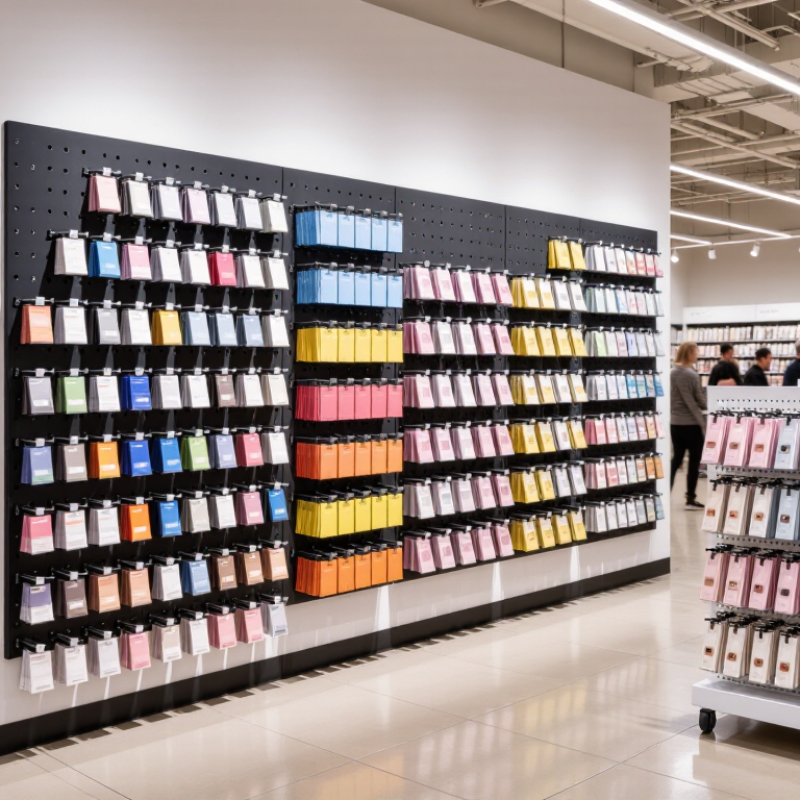
How to Choose the Best Pegboard Displays for Retail

Understanding Pegboard Display Types and Retail Applications

How to Choose the Best Pegboard Displays for Retail

Pegboard displays come in several practical forms. Wall-mounted boards save floor space and suit narrow aisles. Freestanding panels create flexible product zones near entrances or checkout areas. Metal hooks hold packaged accessories, while baskets and shelves support heavier or irregular products. Modular grid panels work well for seasonal layouts because staff can reposition fixtures without rebuilding the entire display.

According to POPAI’s Mass Merchant Shopper Engagement Study, 82% of purchase decisions occurred inside stores. That figure is dated, but it still highlights the value of visible merchandising. The U.S. Census Bureau reported that e-commerce represented 16.1% of total U.S. retail sales in 2024. Physical stores therefore need displays that make browsing quick and tactile. Place high-margin accessories at eye level. Keep popular items between 100 and 160 centimetres from the floor. Leave enough spacing for customers to remove products without disturbing adjacent hooks.

In my fixture audits, pegboards often fail through poor loading, not poor design. A crowded panel feels cheap and makes stock counting difficult. Test hook length, panel height, and weight limits with real packaging. Use contrasting price cards, but avoid excessive signage. Small stores may prefer one vertical panel; larger departments can combine boards with shelves and baskets. Measure sales per facing for four weeks, then adjust the layout. Some assumptions will be wrong. That is useful evidence.

Assessing Store Space, Product Needs, and Customer Access

How to Choose the Best Pegboard Displays for Retail

Assess your store space before choosing a pegboard display. Measure wall width, ceiling height, and aisle clearance. A display may fit the wall but still interrupt customer movement. Mark nearby doors, counters, and emergency paths. Use a simple floor plan, then test the layout with cardboard. This often reveals problems that measurements miss.

Match the board to the products you sell. Small packaged items need closely spaced hooks and clear labels. Heavier products require stronger panels, secure fittings, and verified load ratings. Keep fast-moving items between waist and eye level. Place lighter or less urgent products higher. Product weight matters more than appearance. A stylish display can fail quickly when overloaded.

Customer access should guide every hook position. Shoppers should reach popular items without stretching, bending deeply, or blocking the aisle. Leave enough space for turning carts and assisting companions. Consider children when displaying small products. They may pull items unexpectedly. Staff should also restock without climbing or moving nearby merchandise. Test the display during a busy period, not only in an empty store. Our assumptions can be wrong. A pegboard may look organized but feel crowded in real use. Review sales data, customer questions, and damaged packaging after installation. Small adjustments to spacing can improve both safety and shopping comfort.

How to Choose the Best Pegboard Displays for Retail

Assess available store space, product placement needs, and how easily customers can reach each display zone.

Planning example: This chart uses a 2.1-meter-wide-by-2.1-meter-high usable pegboard section. The prime-access zone provides 1.2 square meters of display area and is best suited to frequently handled or higher-priority products. Lower and upper zones can support larger, lighter, or less frequently selected items.
Store Space
Measure wall width, usable height, aisle clearance, and fixture depth before selecting a pegboard size.
Product Needs
Reserve the largest accessible area for products requiring frequent comparison, handling, or replenishment.
Customer Access
Keep key products within comfortable reach and avoid placing fragile or heavy items in difficult-to-access positions.

Comparing Materials, Sizes, Features, and Installation Methods

Choosing the best pegboard display starts with its material. Steel panels suit busy stores because they resist impact and support heavier shelves. MDF offers a warmer appearance and usually costs less, but moisture can weaken exposed edges. Acrylic creates a clean, modern look for lightweight products. It can scratch easily, though. Weight matters.

Panel size should match both the merchandise and the available wall space. Small panels work well near checkout areas or narrow columns. Larger panels create stronger visual impact but may require extra supports. Leave enough space between hooks, shelves, and product packages. Crowded displays are difficult to shop. Measure twice.

Features should support real selling tasks, not simply add decoration. Adjustable hooks help manage changing product sizes. Shelves suit boxed goods, while bins hold small items neatly. Check the panel’s load rating and the strength of each accessory.

Installation also affects safety and appearance. Direct wall mounting can save space, but suitable anchors are essential for masonry, drywall, or wood. Freestanding frames offer flexibility during store changes, although they need a stable base.

I once underestimated the weight of packaged goods and had to reposition the entire layout. That mistake was costly.

A practical installation plan should include wall measurements, stud locations, tool access, and future maintenance. Choose a system that staff can adjust without damaging the panel or merchandise.

Evaluating Durability, Flexibility, Appearance, and Maintenance

How to Choose the Best Pegboard Displays for Retail

Durability should match the products on display, not just their visual weight. In my retail installations, I check panel thickness, hook strength, and wall fixings before judging appearance. A loaded shelf can expose weak joints within weeks. Steel panels usually resist impact well, while treated wood can offer warmth but may suffer from edge damage. Always review the stated load capacity and test a sample with real merchandise.

Flexibility matters when stock changes often. Adjustable hooks, shelves, baskets, and sign holders help staff refresh a display without drilling new holes. I prefer layouts that can change quickly during busy trading hours. A practical pegboard should support different package sizes and leave enough space for customers’ hands. Too many accessories create clutter. That mistake is easy to make.

Appearance affects trust. Clean lines, consistent spacing, and a suitable finish can make ordinary products feel more organized. However, glossy surfaces may reveal fingerprints, dust, and small scratches. I once chose a polished panel for a high-touch area and underestimated its maintenance needs. Now, I inspect the display under strong store lighting before installation. Maintenance should be simple: use non-abrasive cloths, check loose fittings weekly, and replace damaged hooks promptly. Record recurring problems. They often reveal a poor layout or an unsuitable material.

How to Choose the Best Pegboard Displays for Retail - Evaluating Durability, Flexibility, Appearance, and Maintenance

Pegboard Display Type Durability
(1–5)
Flexibility
(1–5)
Appearance
(1–5)
Typical Load per Hook* Expected Service Life** Maintenance Requirements Best Retail Application
Powder-Coated Steel Pegboard 5 5 4 10–25 lb
4.5–11.3 kg
10–20 years Dust weekly; wipe with a mild, non-abrasive cleaner; inspect hooks and wall fixings periodically. High-traffic stores, tools, hardware, packaged goods, and frequently changed product displays.
Perforated MDF Pegboard 3 4 4 5–15 lb
2.3–6.8 kg
5–10 years Keep dry; clean with a lightly damp cloth; repair chipped finishes to reduce moisture absorption. Boutiques, craft stores, lifestyle shops, and displays where a warm, furniture-like finish is preferred.
Solid Wood Pegboard 4 3 5 8–20 lb
3.6–9.1 kg
8–15 years Dust regularly; avoid excessive moisture; refinish or reseal when the surface becomes worn. Premium interiors, apparel accessories, gift shops, and merchandising that requires a natural visual character.
Acrylic Pegboard 3 4 5 2–8 lb
0.9–3.6 kg
5–10 years Use a soft microfiber cloth and plastic-safe cleaner; avoid abrasive pads, harsh solvents, and excessive tightening. Cosmetics, electronics accessories, jewelry, collectibles, and products that benefit from clear visibility.
PVC or Plastic Pegboard 3 4 3 3–10 lb
1.4–4.5 kg
5–10 years Wipe with mild soap and water; protect from prolonged heat and direct sunlight where discoloration or warping may occur. Temporary promotions, lightweight merchandise, seasonal displays, and damp or easy-clean environments.
Wire Grid Pegboard 4 5 3 5–15 lb
2.3–6.8 kg
8–15 years Dust or vacuum regularly; check welds, coating condition, and floor or wall stability during routine inspections. Pop-up shops, exhibitions, mobile retail, apparel, accessories, and displays requiring quick reconfiguration.

Evaluation guide: Ratings are indicative comparisons based on common retail use. A higher score represents stronger overall performance in that category.

* Load guidance: Actual capacity depends on board thickness, hook design, spacing, mounting method, wall structure, and how evenly the weight is distributed. Always follow the supplier’s tested load rating.

** Service life: These are typical indoor-use estimates with proper installation and maintenance; heavy traffic, humidity, sunlight, impact, and frequent reconfiguration can shorten service life.

Selecting and Organizing the Best Pegboard Display Solution

How to Choose the Best Pegboard Displays for Retail

Selecting and Organizing the Best Pegboard Display Solution

A strong pegboard system begins with the shopper’s path. Place high-demand items between eye and hand level. Keep related products within one arm’s reach. This reduces searching and makes replenishment faster.

The U.S. Census Bureau reported that e-commerce represented 16.1% of total U.S. retail sales in 2024. Physical stores must therefore make browsing feel useful, quick, and tactile.

Measure the wall before selecting hooks, shelves, or baskets. Record product weight, package depth, and expected stock volume. Use shorter hooks for small accessories. Use shelves for boxed or unstable items.

Leave breathing room. Research from the Shop! Association’s shopper engagement studies consistently emphasizes clear presentation and easy product interaction. Crowded panels often look productive, but they can hide important products.

That mistake is easy to make.

Organize by customer mission, not only by product type. A home-repair section might group fasteners, measuring tools, and protective equipment together. Add simple price cards at consistent heights. Keep labels facing forward.

Test the layout during busy hours. Watch where customers pause, reach, or walk away. Retail field experience shows that real behavior can challenge a neat plan.

I once favored maximum stock density, and the display felt efficient. It was not. Customers touched fewer products. A revised layout used fewer hooks and improved visibility.

Review sales, replenishment time, and customer questions weekly. Pegboard displays should remain adjustable, because shopper habits change.

FAQS

What types of pegboard displays suit different retail spaces?

Wall-mounted boards save floor space in narrow aisles. Freestanding panels create flexible zones near entrances or checkout areas. Grid panels suit changing seasonal layouts.

Which accessories work best with pegboard displays?

Use metal hooks for packaged accessories. Choose baskets or shelves for heavier, bulky, or irregular products. Short hooks suit small items.

How should products be positioned on a pegboard?

Place high-margin products near eye level. Keep popular items between 100 and 160 centimetres from the floor. Customers should remove one item easily.

How much product spacing is practical?

Leave enough room for a hand between products. Avoid tightly packed hooks. Leave breathing room. Crowding hides products and complicates stock counting.

How can retailers choose a durable pegboard system?

Check panel thickness, hook strength, wall fixings, and stated load capacity. Test the display with real packaging. Visual weight can be misleading.

Which materials are suitable for retail pegboards?

Steel usually handles impacts well. Treated wood adds warmth but may suffer edge damage. Choose materials according to product weight and store traffic.

How can a pegboard display remain flexible?

Select adjustable hooks, shelves, baskets, and sign holders. Staff can then change layouts without drilling new holes. Test it first.

How should stores maintain pegboard displays?

Wipe surfaces with a non-abrasive cloth. Check loose fittings weekly. Replace damaged hooks promptly. Glossy finishes may show fingerprints and small scratches.

How can retailers measure whether a pegboard layout works?

Track sales per facing for four weeks. Also record replenishment time and customer questions. Watch where shoppers pause, reach, or walk away.

What common pegboard mistake should retailers reconsider?

Maximum stock density can look efficient, but it may reduce visibility. I once favored fuller displays. That assumption failed. Fewer hooks can improve browsing.

Conclusion

Choosing the best Pegboard Displays for retail begins with understanding how different display types support various products, store layouts, and shopping goals. Retailers should assess available wall and floor space, product size and weight, customer reach, and the level of visibility each item requires. A practical display solution should make merchandise easy to browse while keeping the store organized and accessible.

When comparing options, consider materials, dimensions, hook and shelf features, installation methods, and compatibility with existing fixtures. Durability is essential for daily use, while flexibility allows the display to adapt as product ranges change. Appearance and maintenance also influence the overall shopping experience, so retailers should select finishes that complement the store and are easy to clean. By carefully evaluating these factors, businesses can organize products efficiently, improve customer access, and choose a pegboard display solution that balances function, presentation, and long-term value.

Sophia

Sophia

Sophia is a dedicated marketing professional with an exceptional depth of knowledge about her company's products and services. With a keen understanding of market trends and customer needs, she crafts insightful blog posts that not only inform but also engage readers, enriching the company’s online......